The November Once-Over: A Winter Service for Every Floor Lamp in the House
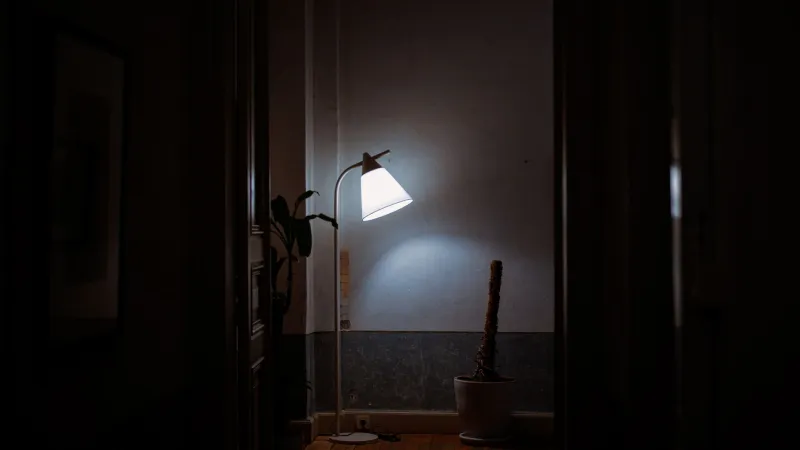
The clocks have gone back, the good lamp is on by half four, and the sitting room has quietly changed jobs. In a UK home, by mid-November a floor lamp stops being a decorative extra and becomes the light that carries the evening. That is exactly why a short audit now is worth more than a panicked replacement in January. Twenty minutes, one lamp at a time, no tools beyond a screwdriver and a bit of common sense.
Start at the plug, not the shade
Most faults announce themselves at the wall end, not in the pretty bit. Unplug the lamp before you touch anything. Check the plug for cracks, a loose cable grip, scorch marks or that faint smell of hot plastic. A plug that feels warm after an hour is not normal. In the UK, a standard lamp plug should carry the correct fuse — many are fitted with a 3A fuse — and the flex should be held firmly by the cord grip. If the plug is damaged, replace the whole plug rather than wrapping it in tape. If your sockets are protected by an RCD, test it. If the lamp has a moulded plug that has gone stiff or discoloured, have it cut off and replaced by someone competent. This is not a job for a late-night video rabbit hole.
The wobble test
A designer floor lamp should feel planted. Put it on the floor where it actually lives, not on a shop carpet. A slight rock on uneven boards can be fixed with a felt pad or a shim; a lean that comes back after tightening is a base problem. Check the thread at the base, the weight plate and any cast foot. Do not over-tighten a hollow base or a slim stem — you can crack the casting or strip the thread. If the base is cracked, the lamp is no longer a lamp; it is a falling object with a shade on top. Retire it.
Cables, fabric flex and the places you forget
Run your hand along the flex. Look for fraying near the shade, a sharp bend at the inline switch, cable trapped under a sofa leg, or a section a pet has chewed. Fabric-covered cable is lovely and very good at hiding a broken conductor. If the outer sheath is damaged, replace the flex. Do not staple a cable to a skirting board, and do not run it under a rug where it gets walked on. Keep it away from radiator pipes and the back of a hot shade. A cable that is warm to the touch after an hour is a cable that is working too hard.
Heat, shades and the bulb question
The shade should be warm, not hot. Check that the bulb is the right type and wattage for the fitting, and that it is compatible with the dimmer if you have one. A dimmable LED that buzzes or flickers is usually a compatibility issue, not a lamp death sentence. Look inside the shade for scorch marks, brittle lining or a brown ring where the bulb sits too close. Never put a higher-wattage bulb in because the room feels dark; change the lamp position or the bulb colour temperature instead. If the shade is scorched, stop using it. Fabric shades and halogen bulbs are a bad pairing, especially in a sitting room where the lamp is on for six hours.
Switches, dimmers and the click you have stopped noticing
A foot switch that needs two stamps. A dimmer that jumps from dim to blazing. A crackle is not character. Replace inline switches and foot switches rather than living with them. If the lamp has a touch dimmer, check that it still responds cleanly and does not stay warm when switched off. For dimmable lamps, make sure the dimmer is rated for LED loads. A buzzing dimmer can be a sign of an incompatible bulb or a tired module. Neither is worth ignoring in a room you use every evening.
Repair or retire?
The honest answer depends on the lamp and the fault. A new plug, a new switch, a replacement flex or a felt pad is usually worth it — especially on a well-made designer lamp with a heavy base and a shade you like. A cracked cast base, scorch damage inside the fitting, water damage, a bent stem or a burned smell from the body of the lamp are different. Those are retire signals. Do not pass a dangerous lamp to a charity shop or leave it on the pavement for someone else to plug in. Take it to your local household waste recycling centre; most councils accept small electricals.
A twenty-minute route round the house
Do one room at a time, unplug each lamp first, and work in this order: plug, flex, base, shade, bulb, switch. Keep a note of what you find. If you are renting, report faults to your landlord in writing rather than fixing wiring yourself. If you own the place and the lamp is vintage, a qualified electrician can rewire it properly; a PAT test is useful for portable appliances but it is not a substitute for repair. And yes, a lamp can pass a PAT test and still have a wobble or a hot shade. Use your eyes and hands.
The bit people forget: the room after dark
An audit is not only about safety. It is also about whether the lamp is doing its job in winter. Once everything is plugged back in, sit where you actually sit at 5pm. Is the shade throwing light into your eyes? Is the bulb too cool and blue for a November evening? Is the lamp too close to a wall, making a hard shadow? Sometimes a 10cm move, a warmer bulb or a clean shade does more than a new lamp. The November once-over is not a chore. It is the difference between a floor lamp that carries the room through the dark months and one that just fills a corner.