The Anti-Mirror Rule: Placing a Floor Lamp in a TV Room So the Screen Stays a Screen
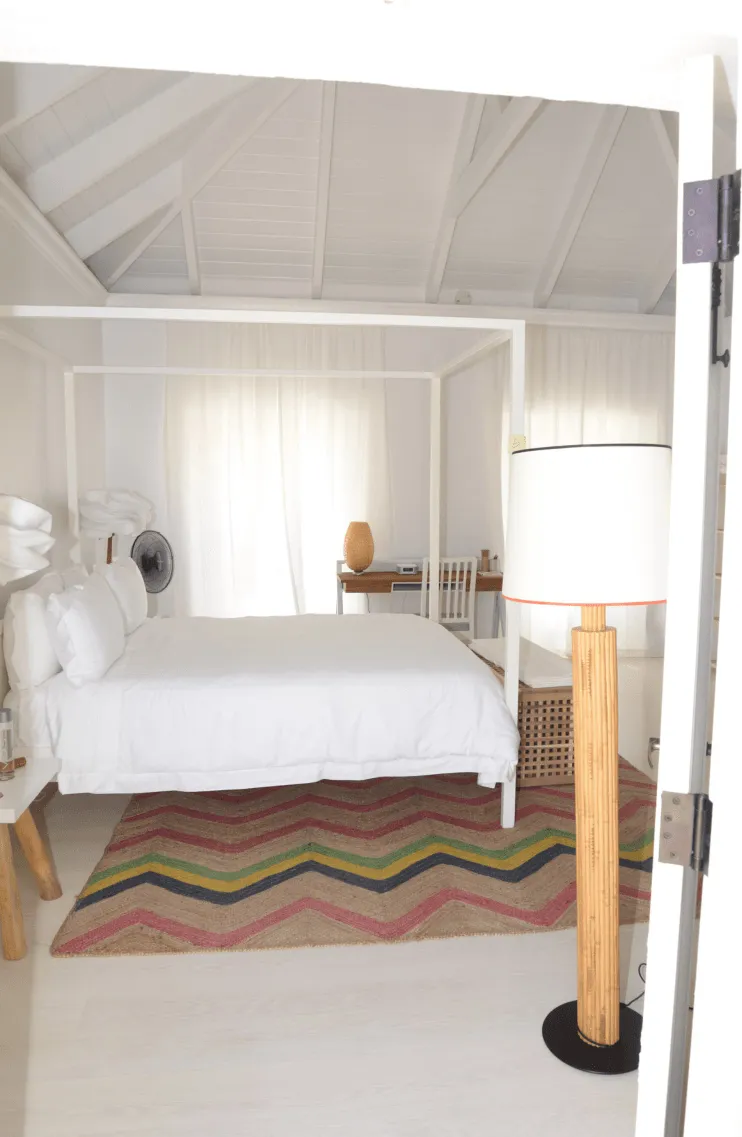
Photo: Federal Bureau of Investigation, Public domain, via Wikimedia Commons
There is a particular disappointment that comes with a new floor lamp in a telly room. In daylight, it looks brilliant: the shade is right, the base sits nicely in the corner, the room feels finished. Then evening arrives, the screen goes on, and every dark scene has a glowing lampshade floating across it. The lamp has not become a bad lamp. It has simply been placed inside the screen's reflection zone.
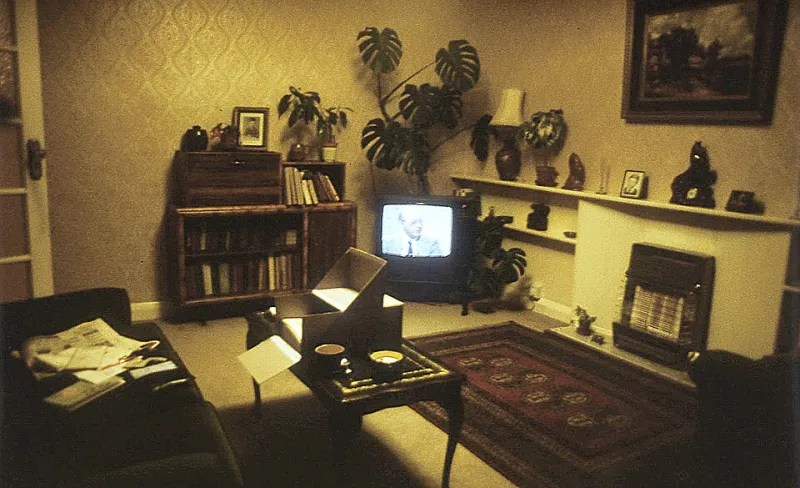
In a typical UK sitting room, the sofa, television and floor lamp form an awkward triangle. The trick is to light the room without lighting the screen. That means thinking about reflection first, decoration second.
Start with the reflection, not the lamp
A glossy television screen is a dark mirror when it is switched on. Any bright object within its reflected view will show up, especially during night scenes, letterboxed films and football under floodlights. The lamp does not have to be in front of the TV to cause trouble. A lamp beside the sofa, a lamp near the bay window or a lamp in the opposite corner can all appear on screen if the angles line up.
Before you commit to a position, try a simple after-dark check. Wait until it is properly dark, turn the television off and sit exactly where you normally watch. Look at the blank screen. If you can see the lamp shade or bulb reflected in it, that is the shape you will see during a dark scene. Move the lamp 20–30cm to one side and look again. Small shifts often solve the problem without changing the lamp.
Where the lamp should sit in the triangle
The safest place for a floor lamp in a TV room is beside or just behind the sofa, outside the direct line between the screen and your eyes. Avoid putting it between the sofa and the television, even if that looks neat in a furniture showroom. A lamp in that gap is almost guaranteed to bounce off the screen.
If the lamp has to sit near the television, keep it at least 60–90cm to the side of the screen and angle the light away from the glass. In a room with a 3.5–4m viewing distance, a lamp placed 1–1.5m to the side of the TV is usually safer than one tucked right against the cabinet. The aim is to wash light onto the wall, the sofa or the floor, not across the front of the picture.
Shade height and direction matter more than wattage
A common mistake is a shade that sits level with the middle of the screen. That glowing rectangle becomes the brightest thing in the room, and the television has no chance. If the lamp is close to the TV, aim for the bright opening of the shade to sit below the bottom edge of the screen or a good 30–40cm above the top edge. Never let the shade sit level with the picture if you can avoid it.
Direction is just as important. An opaque shade with a closed top or an inner diffuser keeps light from spilling upwards and sideways. A tiltable head should point down towards a sofa arm or back towards the wall, not towards the television. Clear glass shades, exposed bulbs and shiny metallic interiors are handsome, but they are glare machines beside a screen. If you love the lamp, consider a swap to a plain drum shade in linen or cotton.
Dimming, warmth and the bulb that behaves
For a TV room, warmth is your friend. Look for a dimmable LED bulb around 2700K, or even 2200–2400K if you want a candlelit feel. Cool white bulbs at 4000K make the room feel like a supermarket aisle and show up more sharply in the screen. A 400–600 lumen bulb is usually enough for ambient light, especially if the lamp is dimmable.
Do not rely on switching the lamp off every time a film starts. A dimmer lets the lamp carry the room at 20–30% while the television does its thing. Check that the bulb is genuinely dimmable and that the dimmer is compatible; cheap dimmers can buzz or flicker, which is far more distracting than a little reflected light. A smart plug with dimming capability can work, but a simple inline dimmer is often less fuss.
The five-minute glare test
Once the lamp is in place, run a proper test rather than trusting daylight. At night, with the television off, sit in your usual spot and look for the lamp in the screen. Then switch on a dark scene, ideally something with lots of shadow. If the reflection sits over faces or the middle of the picture, move the lamp sideways or further back. Check from the second-best seat too, because the person on the far end of the sofa may see a different angle.
If the lamp has an adjustable head, tilt it away from the screen and repeat. If the shade is the culprit, try a lower-wattage bulb or an opaque replacement. Mark the final position with a bit of tape on the floor before you forget it. The best TV-room lamp position is the one you stop noticing.
Lamp shapes that behave well beside a TV
- An opaque drum shade with a diffuser, kept below screen height
- A closed-top metal cone aimed down towards a chair or wall
- A slim reading lamp with an adjustable head pointed away from the screen
- A ceramic or linen shade with a soft inner lining and no exposed bulb
- A low-output wall-washer floor lamp angled at the wall behind the sofa
Approach with caution: arc lamps that hang over the seating area, clear glass shades, exposed filament bulbs and high-output uplighters. They can look wonderful, but they are the usual suspects when a screen turns silver.
When the only socket is behind the sofa
This is the classic UK sitting-room problem. The socket is in the wrong place, the lamp wants to be somewhere else, and a cable across the carpet is not an option. The neatest fix is often to put the lamp behind the sofa and bounce light off the wall. It uses the socket you have, keeps the cable hidden and gives a soft wash that flatters the room without hitting the screen.
If the lamp must sit further away, run a slim extension lead along the skirting rather than across the floor. Use cable trunking to keep it tidy and avoid trapping flex under a rug or sofa foot. A smart plug or inline foot switch saves you reaching behind the sofa every evening. And if the reflection persists, swap the shade before you swap the lamp. Most TV-room glare is a placement problem, not a product problem.
Get the triangle right and the floor lamp becomes what it should be: the quiet light that makes the room feel lived-in, while the screen stays a screen.