The £12 Fix That Makes a £400 Floor Lamp Look Serious
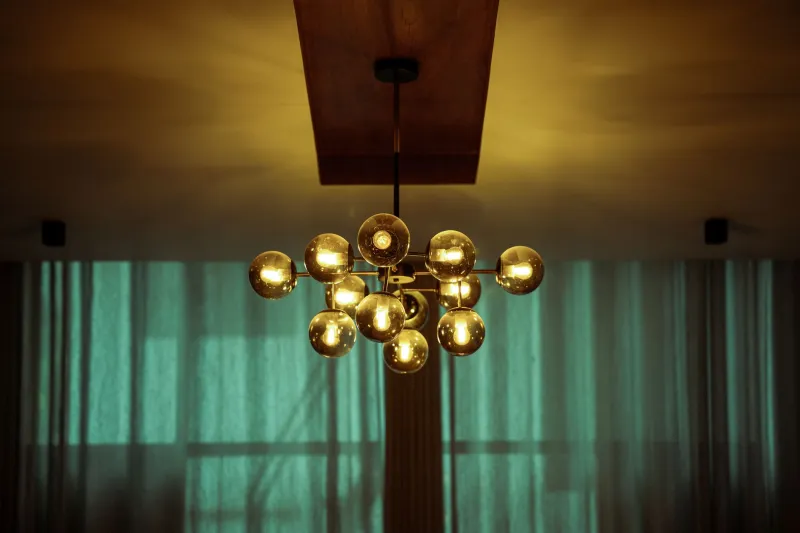
You can spend months choosing a floor lamp. You compare finishes, check the base weight, measure the shade against the sofa, and finally commit. Then you get it home, screw in whatever bulb is rattling around in the kitchen drawer, and wonder why the whole thing looks slightly wrong. Nine times out of ten, the lamp is fine. The bulb is doing the damage.
A floor lamp is not really a lamp until it has light coming out of it. The bulb or LED module decides the colour of the room, the mood of the corner, and whether the shade looks like brushed brass or a chip-shop window. The good news is that this is one of the cheapest fixes in home lighting. A sensible £12 bulb can make a £400 floor lamp look far more expensive than the wrong £4 one ever will.
The bulb is half the lamp
Think of the bulb as the lamp's voice. The base and shade set the volume and the look, but the bulb controls the tone. A warm, high-quality LED can make a plain shade feel tailored. A harsh, cool-white bulb can make the same shade look like it belongs in a dentist's waiting room.
This matters more with designer floor lamps because the shade is usually part of the design. A linen drum, a pleated cotton shade, a smoked glass globe or a slim metal cone all interact with light differently. You are not just lighting a room. You are lighting a shade, and the shade is lighting the room back.
First, read the label on the lamp
Before you buy anything, check what the lamp actually accepts. Most UK floor lamps take an E27 screw fitting, but smaller shades may take E14, and some designs use GU10 or a dedicated integrated LED. The label will also tell you the maximum wattage. With modern LEDs, that limit is rarely a problem, but it still matters for heat and safety.
If the lamp has an integrated LED module, you may not be able to change the bulb at all. In that case, check the colour temperature and CRI before you buy the lamp. If it is a dimmable lamp, check whether the integrated module is dimmable too. A beautiful floor lamp with a fixed cool-white module is a difficult thing to live with.
Colour temperature: warm, not yellow
For most UK living rooms, aim for 2700K to 3000K. That is the warm end of the scale: cosy without going orange. A 2700K bulb suits a traditional shade and a softer, evening mood. A 3000K bulb is a touch crisper and works well in a hallway or a room where you read.
Avoid 4000K and above unless you genuinely want a cool, clinical feel. Cool white bulbs are useful in kitchens and utility rooms, but in a sitting room they flatten the space and make warm colours look grey. If a bulb is described only as 'white' or 'daylight', treat that as a warning rather than a recommendation.
CRI and the thing you can't unsee
CRI stands for colour rendering index. In simple terms, it tells you how convincingly the bulb shows colours. A high-CRI bulb makes wood, wool, paint and skin tones look natural. A low-CRI bulb can make a burgundy sofa look brown and a green wall look slightly off.
Look for CRI 90 or above if the lamp is in a main living space. Many good LED bulbs now list this on the box, and it is often the difference between a £8 bulb and a £12 bulb. That is the £12 fix in action. You are not paying for extra brightness. You are paying for the room to look like itself.
Lumens, not wattage
Watts tell you how much energy a bulb uses. Lumens tell you how much light it gives out. For a floor lamp used for ambience, somewhere around 400 to 800 lumens is a useful starting point. For reading, you may want more, or you may want a second lamp closer to the chair.
Do not assume brighter is better. A 1,500-lumen bulb in a small drum shade can glare, wash out the corner and make the lamp feel like a security light. A 600-lumen bulb with a warm colour temperature and a decent CRI will usually feel more considered.
Dimming: the compatibility trap
If your floor lamp has a dimmer, whether a foot switch, a touch dimmer or a smart plug, check that the bulb is dimmable. Not all LEDs are. A non-dimmable LED on a dimmer can flicker, buzz, or refuse to dim smoothly.
There is also a compatibility issue between dimmer switches and LED drivers. Some bulbs work beautifully with one dimmer and badly with another. If you can, buy from a retailer with a clear returns policy and test the bulb in the lamp before you commit. In 2026, dimmable LED technology is much better than it was, but 'dimmable' on the box is still not a guarantee of a lovely dimming curve.
Flicker: the cheap-bulb giveaway
Flicker is the thing people notice without knowing they are noticing it. A cheap LED may flicker at a frequency your eye cannot consciously see, but your brain still registers it as tiredness or unease. You may find the room less relaxing without being able to say why.
You do not need laboratory equipment to make a sensible judgement. Filming the bulb slowly on your phone can sometimes reveal banding, but the better test is simply to buy from a known brand and avoid the very cheapest unbranded LEDs. A good bulb should feel steady when you glance across the room.
Shade and beam angle
A bulb does not shine evenly in every direction. Some have a narrow beam, some are more omnidirectional. In a floor lamp with a wide drum shade, an omnidirectional bulb usually works best because it lights the shade evenly. In a directional reading lamp, a bulb with a tighter beam may be more useful.
Also think about size. A bulb that is too tall can poke out of a small shade or sit too close to the fabric. A bulb that is too wide can look clumsy through a clear glass shade. The bulb is part of the visual composition, even if you are the only person who ever notices it.
The sensible £12 test
Before you replace the whole lamp, try a better bulb. Choose a warm 2700K or 3000K LED, CRI 90+, dimmable if needed, with a sensible lumen output for the room. Put it in the lamp, turn off the ceiling light, and look at the shade rather than the bulb.
If the shade glows evenly, the colours in the room feel natural, and the corner feels calmer, you have solved the problem. The lamp was never the weak link. It was waiting for the right light.