First Light at the Door: A Floor-Lamp Plan for the Hallway You Actually Use
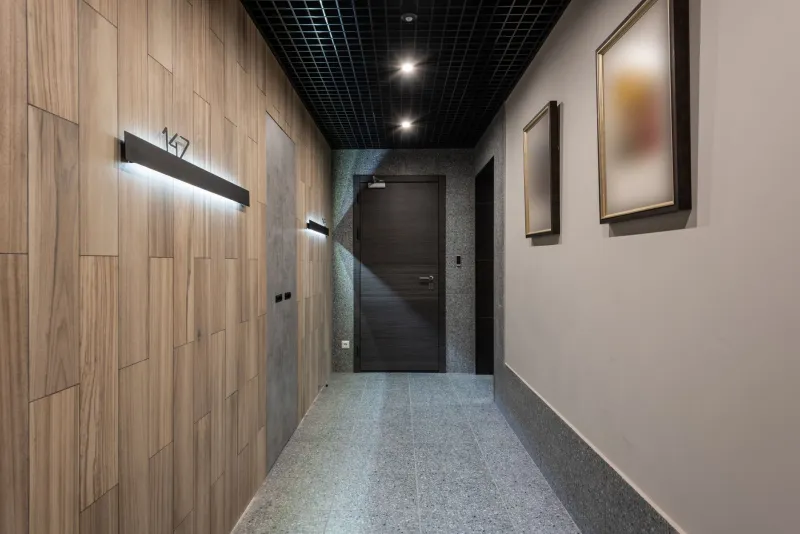
The hallway is the room you pass through most and notice least. It is where keys land, coats get dumped, parcels wait and guests decide — in about four seconds — what your home feels like. Yet in plenty of UK houses the hall is lit by one grim pendant, a bare bulb, or nothing at all. A floor lamp is a simple fix, but only if you choose it for the hallway you actually have: narrow, draughty, north-facing, full of door swings and probably rented.
Start with the walk-through, not the lamp
Before you look at a single shade, walk your hall at the times you use it most. Morning, when you are leaving in a hurry. Evening, when the front door is locked and the house is settling. Notice where the light falls, where shadows pool, and where you instinctively put your bag down.
Then measure. You need the clear walking route, the door swing arcs, the radiator, the letterbox, the coat hooks and the understairs clutter. Mark a lamp-sized footprint on the floor with masking tape. A hallway is not a living room; a lamp that looks modest online can become a shin-height roadblock in a 1m-wide Victorian terrace hall. Leave at least 30cm between the lamp base and the main walkway, and keep the base out of the arc of any inward-opening door.
Slim choices that earn their footprint
Hallway floor lamps should be tall, narrow and stable. A column lamp with a compact weighted base — roughly 25–30cm across — is usually the sweet spot. Tripods can work in a wider 1930s hall, but their splayed legs eat floor space and catch hoover cords. Look for an inline foot switch rather than a rocker switch hidden under the shade; you will be switching it on with your hands full.
Corner-friendly does not mean crammed into a corner. In a narrow hall, the best spot is often the end wall, an understairs alcove, or the stretch beside the front door that nobody walks through. A slim lamp there draws the eye down the hall and gives the arrival a focal point. Keep the shade above or below eye level where possible. A shade that sits exactly at eye height will glare every time you walk past.
The north-facing hall problem
Small north-facing halls are their own genre. They get little direct sun, often have a narrow window over the door, and can feel cold even when the heating is on. Cool-white bulbs make this worse. Choose warm white LEDs around 2700K, with a decent CRI so coats and woodwork do not look grey. A cream, oatmeal or soft taupe linen shade flatters skin tones and bounces a gentler light than a dark or glossy shade, which absorbs and spotlights in equal measure.
If the hall is very small, consider a lamp with a bowl or semi-opaque shade that pushes light up as well as down. You get a wash of warmth near the ceiling without a harsh pool at floor level. A dimmable bulb or plug-in dimmer is worth the extra few pounds; hallway light at 8am and 11pm should not be the same brightness.
Cables, sockets and the renter's truce
Most UK halls have one double socket, usually in the most inconvenient place. Do not run a loose extension lead across a doorway, and do not daisy-chain adaptors. If the lamp cable will not reach, use a proper extension lead with an RCD plug, routed along the skirting rather than across the floor. Adhesive cable clips or a slim D-line trunking can keep things tidy without drilling.
Renters have more options than they think. Rechargeable floor lamps have improved enormously and now include slim column designs that suit hallways. A plug-in dimmer and a smart plug with a timer can make a basic lamp feel considered. If you can drill, a cable channel down the skirting is neat and reversible. If you cannot, go for a weighted base, a fabric cable in a colour that blends with the wall, and clips that come off without taking the paint with them.
Doors, walkways and the quiet safety rules
A hallway is an escape route. Keep it clear. Do not place a floor lamp where it narrows the path to the front door, and never behind a door that opens inward. Keep fabric shades away from coat hooks, radiators and piles of post. Check that the cable is not trapped under the door or stretched across a threshold. If you have a fire door, do not wedge it open with a lamp base or cable.
The 30cm rule is a decent guide: 30cm clear around the base, and at least 90cm of clear walking width where you can manage it. In a very tight hall, a slim lamp at the far end — beyond the main traffic route — is better than a wider lamp halfway down.
The arrival glow
A hallway floor lamp is not there to light the whole house. It is there to make the first and last minute of the day feel deliberate. A warm pool of light at the end of the hall, a dimmed shade by the door, a lamp that comes on with a timer before you get home — these are small moves with an outsized effect.
Start with the tape outline, choose a narrow base and a warm, forgiving shade, and route the cable like you mean it. The hallway will stop being the bit you walk through and start being the room that welcomes you in.