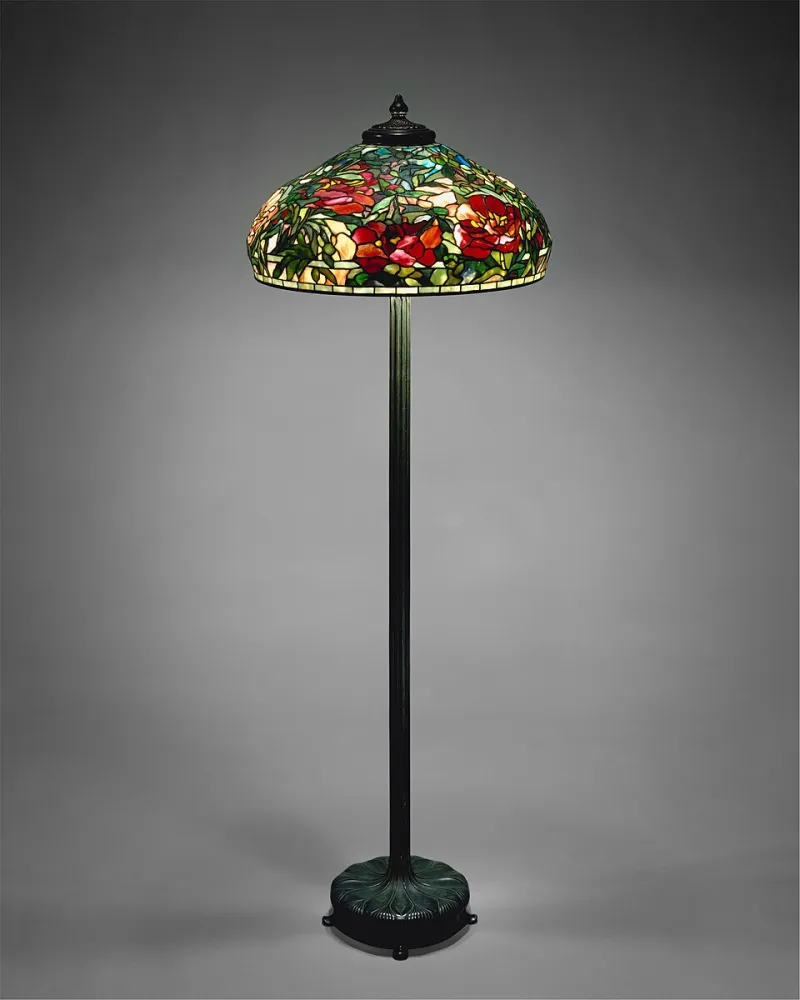
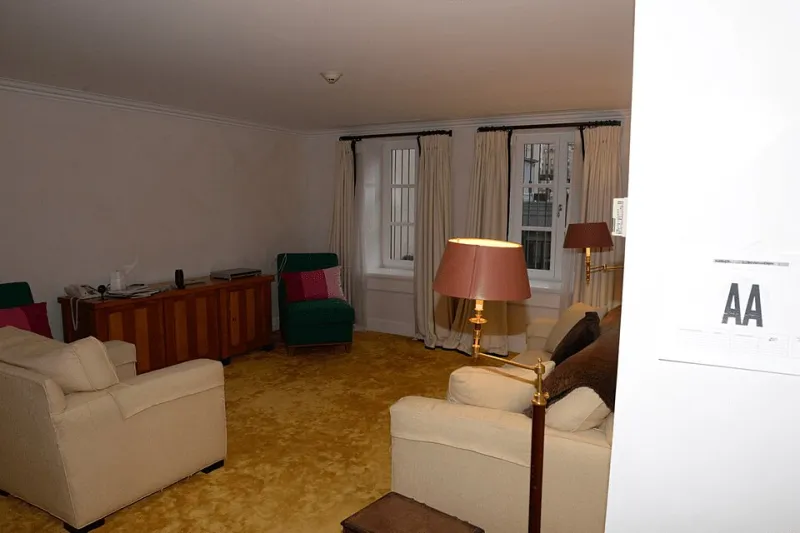
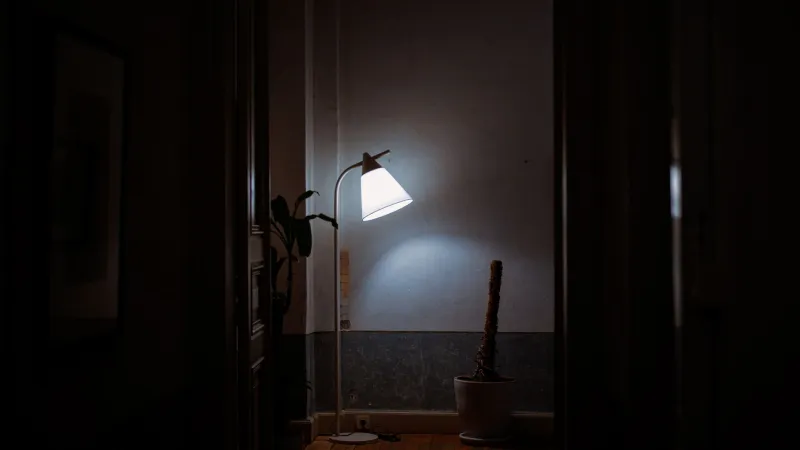
After Dark in the Glass Room: One Floor Lamp, Three Zones, No Fishbowl
Photo: Thomas Hosmer Shepherd, Public domain, via Wikimedia Commons
Garden rooms are brilliant in daylight. They borrow the garden, stretch the house and give everyone somewhere to go that isn’t the kitchen. Then the sun drops, the glass goes dark and the whole room can start to feel like a stage set — with you in it. The answer isn’t to flood the place with downlights. It’s usually one good designer floor lamp, placed with a bit of thought, doing the quiet work after dark.
Start with the glass, not the lamp
A glazed room has a second personality at night. Every window becomes a mirror, and a lamp placed too close to the glass will show up twice: once as a real light, once as a bright smear in the reflection. That double image is what makes a garden room feel like a fishbowl, even when nobody can actually see in.
Before you move furniture, walk the room with the lamp switched off and imagine where the reflections will land. Then set the lamp back from the glazing — roughly half a metre is a useful starting point — and slightly off-axis from the main window. You want the shade to be visible as a soft shape in the room, not as a hard bright spot in the glass. If the room is overlooked, blinds or a simple linen curtain are not defeatist. They are part of the lighting plan.
Warm light, low glare, and a dimmer if you can
Garden rooms often get fitted with cool, bright downlights because they are treated as extensions of the kitchen or conservatory. After sunset, that is exactly the wrong mood. A floor lamp should be the warm anchor, so choose a bulb around 2700K — the sort of amber-white you get from a good table lamp — and keep the output modest. A dimmable 6–8W LED is plenty for most UK garden rooms, especially if the walls and ceiling are pale.
Glare matters more here than in a normal sitting room, because there is so much glass to bounce it around. An opaque or lightly ribbed shade is kinder than clear glass, and a shade that throws light up and down is more useful than a narrow spotlight. If you already own a smart bulb, use it to set a low evening scene rather than cycling through colours. The goal is a room that feels lit from within, not lit up.
Let the shade do the directing
The shape of the shade changes how the room behaves. A wide drum or tapered cone gives a generous pool of light and a soft wash on the ceiling, which suits a seating zone. A more enclosed shade keeps the light lower and calmer, which is better if the room is overlooked or theglazing is close to a neighbour. Avoid anything that puts a bare bulb at eye level when you are sitting down.
If the lamp has an adjustable head, don’t aim it straight at the glass. Angle it across the room instead, so the light grazes a wall, a bookcase or the back of a sofa. That sideways wash is what makes a glass box feel like a room with edges.
Three zones, one lamp
A garden room usually has to be several things: a place to sit, a desk for the odd working day, and somewhere to put a drink down when friends come round. One floor lamp can’t light all three equally, but it can make the room read as one composition.
For the seating zone, put the lamp at the end of the sofa or beside the armchair that gets used most. The shade should sit roughly at seated shoulder height, so the light falls onto a book or a lap rather than into your eyes. For a desk zone, place the lamp on the opposite side from your writing hand if possible, or use it as background light and keep a small task lamp for actual paperwork. For a bar or sideboard zone, let the floor lamp sit slightly behind the furniture, so bottles and glasses catch a little glow without turning into a display.
If the room is tight, choose a slim base and a shade that doesn’t flare wider than the table it sits beside. A floor lamp earns its floor space by doing more than one job: it should light the seating, reassure the desk and make the bar corner feel deliberate.
The fishbowl fix is mostly softness
Glass rooms feel exposed because there is nothing to absorb the light. A rug, an upholstered chair, a curtain and a full bookcase all help. So does resisting the urge to light every corner. One floor lamp, one low ceiling light or a couple of wall lights on a dimmer is usually enough. The darkness outside is not the enemy; it is the contrast that makes the room feel snug.
Keep cables away from walkways and door thresholds, and check that the lamp is stable on any hard floor. A weighted base is worth more than a pretty one in a room where people move around with drinks.
A small after-dark routine
As the evenings draw in, give the room a two-minute once-over: switch off the cold ceiling lights, turn the floor lamp to its lowest setting, close the blinds if the glass is showing more of the room than you want, and check that the shade isn’t reflecting in the main window. Then leave it alone. A garden room should feel like a retreat after sunset, not a showroom. One warm lamp, placed with a little restraint, is often all the architecture needs.