Green Leaves, Good Shadows: The Floor-Lamp Rules for a Plant-Heavy Sitting Room
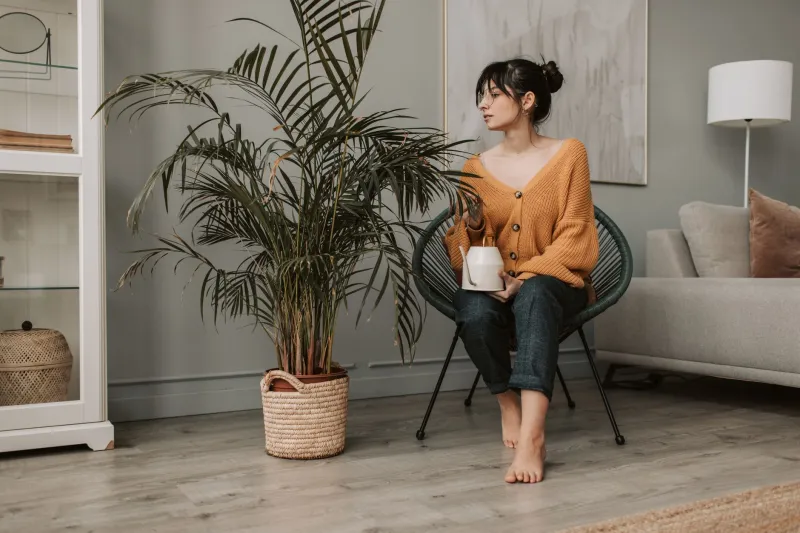
Houseplants and floor lamps are natural flatmates. Both live on the floor, both fill the awkward gaps, and both can make a sitting room feel softer without a single cushion being plumped. But put them together badly and you get the familiar sight of a once-glossy ficus looking like it has been left too close to a radiator, with a designer floor lamp glowering beside it.
The trick is not to treat the plant as a decoration you park next to the lamp. Treat the lamp as the thing that decides how the plant reads. Get the light direction, shade shape and bulb right, and a ordinary monstera can look like sculpture. Get them wrong, and even a very good lamp will make a room feel like a garden centre clearance shelf.
Start With the Leaf, Not the Lamp
Before you shop for a floor lamp, look at the leaves you already own. Are they glossy and dark, like a rubber plant or a ZZ plant? Are they matte and soft, like a fern or a peace lily? Are they variegated, with cream or pink edges that need a gentler wash of light rather than a hard spotlight?
Glossy leaves respond well to side light. A lamp placed slightly to the side of the plant will catch the leaf surface and give it a bit of depth, rather than flattening it into a green blob. Matte leaves prefer a softer, more diffused light, because a sharp beam can make every dry edge and dusty patch look like a headline.
This is where a designer floor lamp earns its keep. A well-made shade does more than look handsome on the floor plan. It controls where the light goes, and that is what decides whether your plant looks alive or merely present.
The Difference Between Uplight and Downlight
Most floor lamps fall into two broad camps: those that throw light upwards and those that push it down. For plant-heavy rooms, neither is automatically right. It depends on where the leaves sit.
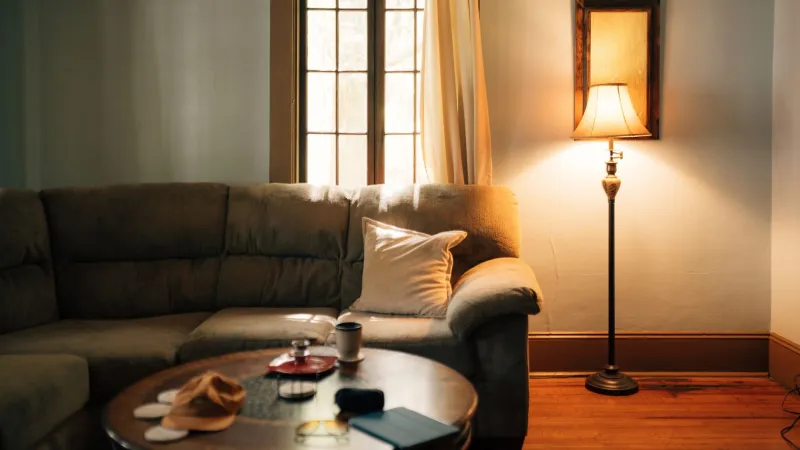
An uplight is lovely for atmosphere. It washes the wall and ceiling, softens the room and makes the plant in front of it read as a silhouette. That can be very handsome in a period sitting room with high ceilings and a dark corner that needs a bit of glow. But if the plant is tall and the bulb is hot, an uplight tucked under the leaves is a recipe for crispy edges.
A downlight is more direct. It can graze the top of a plant and cast strong shadows, which is brilliant if you want drama. It is less brilliant if the lamp is too close, because the leaves nearest the shade will get the full force of the bulb while the rest of the plant sits in gloom.
The sweet spot is usually a lamp with an open or semi-open shade that lets light spill in more than one direction. You get a pool of light on the floor, a wash on the wall and enough sideways light to show the leaves without cooking them.
Shade Shape Matters More Than You Think
A wide drum shade spreads light generously. It is forgiving, good for renters and good for rooms where the plant collection has got a little out of hand. A tapered shade directs light downwards and can feel more formal, which suits a neat pair of standards flanking a sofa. A globe or exposed-bulb design is the most sculptural, but it is also the least protective if a trailing plant decides to reach for the warmth.
If you have a plant-heavy sitting room, look for a shade with a little breathing room at the top and bottom. That does not mean you need a utility-style lamp. Plenty of designer floor lamps use open shades without looking clinical. The point is to avoid a sealed, hot box with a bulb pressed close to a leaf.
Also think about the shade's colour. A pale shade will bounce more light around and make the room feel lighter. A dark shade will absorb some of it and create a moodier pool. Neither is wrong, but a dark shade in a north-facing room with dense foliage can turn the whole corner into a cave.
Bulb Warmth: The Quiet Decider
For a UK sitting room, 2700K is the comfortable default. It is warm without being orange, and it makes green leaves look green rather than grey. A 3000K bulb is a little crisper and can suit a more modern room, but go much cooler and the plants start to look like they are waiting for a hospital inspection.
The bigger issue is heat. Traditional halogen bulbs run hot, and a leaf that touches or sits within a few centimetres of one will suffer. LED bulbs are the sensible choice in 2026, not just because they use less energy but because they are much kinder to foliage. Look for a dimmable LED if the lamp supports it. Dimming gives you the option of a bright, clear light for reading and a softer glow for the evening, when the plants are doing nothing more demanding than looking nice.
The Crispy-Leaf Mistakes to Avoid
Most plant damage around floor lamps comes down to distance and trapped heat. Keep the shade and bulb at least 30–45cm from the nearest leaves, and further if the bulb is exposed. If you can feel noticeable warmth on the back of your hand after a minute, the plant can feel it too.
Tight corners are the other problem. A floor lamp wedged into a corner with a plant pressed against the wall leaves nowhere for heat to escape and nowhere for the light to fall. Give the lamp a little air around the shade, and give the plant room to sit slightly forward of the wall rather than flattened into it.
And do not point a narrow spotlight directly at a delicate leaf. It might look dramatic for an evening, but it is not a long-term arrangement.
Use Shadows Like Furniture
One of the best things a floor lamp can do for a plant-heavy room is cast a shadow. A single lamp, placed to the side, can throw leaf shapes across a plain wall and make the room feel deeper and more interesting without adding another object.
To get that effect, move the plant 20–30cm at a time until the shadow lands where you want it. A little trial and error is normal. The shadow should feel like part of the room, not like a moth problem. A dimmer helps here, because the same setup can go from architectural to gloomy in one twist of the dial.
A Renter-Friendly Plan for Plant People
Renters often end up with the darkest corner of the flat and the most plants. That is fine. You do not need to rewire anything to make a floor lamp work. Choose a plug-in lamp with a weighted base, keep the cable tidy with adhesive clips, and avoid running a cable across a walking route.
If the room is packed with plants, do not try to light every leaf. Pick one grouping — the tall plant, the trailing one and the pot beside it — and let the floor lamp do its work there. The rest of the room can stay softer. A single well-placed designer floor lamp will make a bigger difference than three average ones competing for attention.
The Short Shopping Checklist
Look for a lamp that takes an LED bulb, ideally dimmable. Choose a shade that lets some light escape sideways and upwards rather than trapping it all in one hot beam. Check the base weight if it will sit near a plant stand or a busy walkway. And buy the bulb at the same time as the lamp, so you are not tempted to use whatever was in the kitchen drawer.
A floor lamp will not keep your plants alive on its own. Watering, drainage and the right window still matter. But it can change how they look, and that is often the difference between a room that feels lush and a room that feels like a collection of pots. Get the light right, and the leaves will do the rest.