Under the Beams: Compact Floor Lamps That Make Low Ceilings Feel Intentional
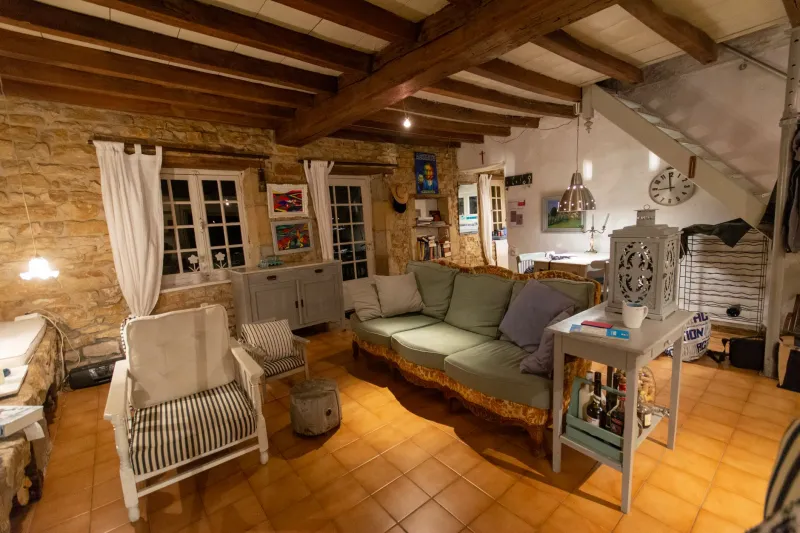
Low ceilings get a bad reputation. In a cottage, converted barn or old terrace, though, the ceiling is often the most interesting thing in the room: beams that have settled, plaster that dips, a window head that sits lower than you expect. The problem is not the architecture. It is the pendant light hanging in the middle of it, doing its best impression of a lid.
Floor lamps are the obvious answer, but not the usual floor lamps. A tall arc or a wide drum shade will fight a low beam and lose. What you want is compact, slim and directional: a lamp that puts warm light where people actually sit, rather than trying to illuminate the whole room from above.
Start with the beam line, not the shade
Before you shop, measure the clear height under the lowest beam and the height of your sofa or chair. A floor lamp in a low-beamed room should usually finish below the beam line, so the shade does not appear to collide with the timber. In practice, that often means a lamp around 120–145cm tall, though the right number depends on your seating.
Think in pools of light. A low room feels calmer when the light is at seated eye level or below, with a warm bulb and a shade that directs the beam down and across. A 2700K LED is the safe choice; anything cooler starts to feel like a waiting room. If the lamp is dimmable, better still.
Five profiles worth hunting for
1. The shallow-drum column lamp. This is the workhorse. Look for a slim metal or timber stem, a weighted base and a drum shade that is wider than it is deep — roughly 30–35cm across, but no more than 20cm tall. A shallow shade keeps the visual weight low, so the lamp reads as furniture rather than a mushroom. Put it beside a sofa or in the corner of a snug, and aim for a warm glow rather than a spotlight.
2. The low tripod. Tripods can work in barn conversions, but only the squat ones. Avoid the tall, leggy versions that put the shade at beam height. A low tripod with splayed legs, a small tapered shade and a solid base plate will feel grounded. It suits a room with a stone floor or a big rug, and it is easy to move when you need to vacuum.
3. The swing-arm reading lamp. In a cottage with alcoves, a swing-arm floor lamp is often smarter than a table lamp. The arm reaches over a chair without taking up table space, and the small shade can be angled towards a book. Choose one with a heavy base and a joint that stays where you put it. A lamp that slowly droops is a daily irritation.
4. The slim pharmacy-style task lamp. The pharmacy lamp — a narrow stem, an adjustable arm and a small metal shade — is made for low rooms. It is compact, directional and visually quiet. Use it beside a reading chair or between two windows. The best versions have a solid base and a switch you can reach without bending behind the shade. Warm bulb, always.
5. The compact uplighter with a diffuser. For dark corners, a half-height uplighter can bounce light off the ceiling between beams. The key word is diffuser: you want a soft wash, not a hot spot on the plaster. Keep it low, dimmable and away from the main walkway. This is the lamp that lifts a room without demanding attention.
Shades, stems and the warm-light rule
Compact does not mean mean. A linen or cotton shade will soften the light; a metal shade will make it more directional. Tapered drums and small cones are usually safer than wide, shallow saucers in a low room. Check the shade does not glare when you are sitting down — if you can see the bulb from the sofa, the shade is too open or the lamp is too tall.
Stems should be slim but not spindly. A 15mm steel stem can look elegant; a 10mm one can feel like a coat stand. The base should be wider than the shade looks, especially on carpet.
Old floors, old houses
Cottages rarely have level floors. Put felt pads under metal feet, and check the lamp does not rock when you lean it gently. If the floor is very uneven, look for adjustable glides. And keep cables out of walkways; a floor lamp that has to be stepped over is a floor lamp that will eventually be knocked over.
The final check
Stand back. Does the lamp sit below the beams, or does it try to join them? Does the shade glow warmly at seated height? Can you reach the switch without moving the furniture? If the answer is yes, you have found a floor lamp that works with the room rather than against it. In a low-beamed cottage, that is the whole game.