The Long-Haul Floor Lamp: What Separates a Future Heirloom From Future Clutter
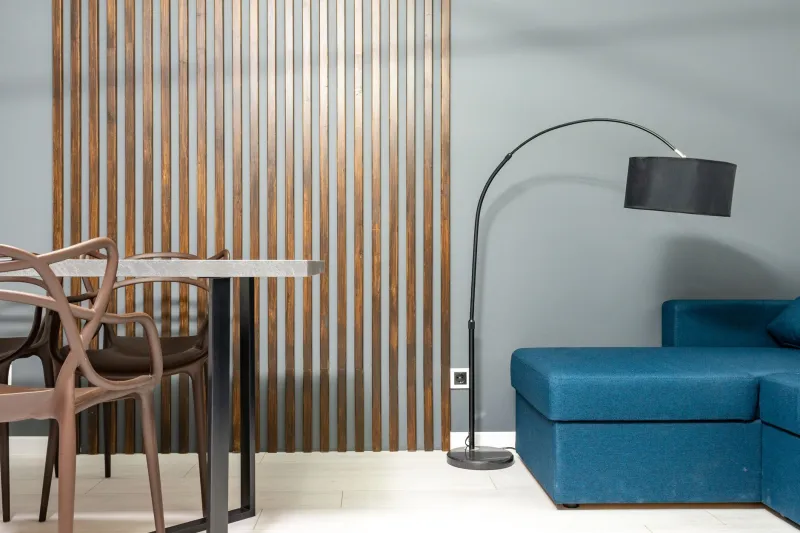
Most floor lamps look fine on the day you buy them. The real question is what they will look like in ten years, once the trend cycle has moved on, the shade has seen a few summers of strong sun, and the switch has been clicked a few thousand times. That is the difference between a considered heirloom and expensive clutter. And it is not simply a matter of spending more. A £900 lamp with a glued-on shade and a sealed LED module can age worse than a £150 lamp with honest materials and a standard bulb fitting.
Start With the Finish, Not the Photo
Finish is where most buying decisions are made, and it is also where most long-term disappointment hides. Unlacquered brass is the classic example. It will darken, spot and develop a patina. In a British home, that patina is usually charming on a lamp base that gets handled and dusted. But it is not uniform, and it is not instant. If you want a showroom-perfect gold tone forever, buy lacquered brass and accept that the lacquer itself may wear through at the high-touch points. If you want something that looks better in year eight than year one, unlacquered brass is usually the better bet.
Powder-coated steel is the quiet workhorse of the floor-lamp world. It is tough, affordable and available in every colour from sensible to regrettable. The catch is chips. A chip on a matt black base is visible, and touch-up paint rarely matches perfectly. That does not make powder-coated steel a bad choice, but it does mean you should look at the edges and joints before you buy. A well-made steel lamp with a slightly living finish will wear better than a fashionable finish that cannot be repaired.
Marble bases deserve their own warning. They are heavy, stable and genuinely useful in a house with children or a dog. They are also porous. Spill red wine or leave a wet mug on the base and you may regret it. A sealed marble base is easier to live with, but the seal needs renewing. And if the lamp ever needs rewiring, you will be grateful for a base that can be opened without destroying the stone.
The Shade Is the Weak Link
Almost every floor lamp shade will fail before the base does. Fabric shades fade, paper shades crease, and metal shades dent. That is normal. What matters is whether you can replace the shade without replacing the whole lamp. Check the fitting size, usually E27 or E14 in the UK, and check whether the shade is held on by a standard harp and finial or by something proprietary. A lamp with a standard fitting and a wide choice of replacement shades is a lamp you can keep for decades. A lamp with a bespoke shade and no spare stock is a future skip hire.
This is also where integrated LED lamps become tricky. They are efficient and often beautifully made, but when the LED module fails, you cannot simply screw in a new bulb. Some makers offer replacement modules; many do not. If you are buying an LED floor lamp, ask directly about the expected life of the module and whether a replacement is stocked in the UK. If the answer is vague, treat the lamp as a ten-year purchase at best, not a heirloom.
Repairability Is the Quiet Luxury
A designer floor lamp should be repairable in the same way a good chair should be reupholstered. That means accessible screws, standard cable, a replaceable switch and a maker who can supply parts. Before you buy, ask a few blunt questions. Can I buy a replacement shade? Can I buy a new switch? Is the cable standard three-core flex? Can the lamp be rewired by a local electrician? Do you keep spares for five years, ten years, longer?
The best makers answer these questions without flinching. The worst change the subject. In the UK, we are lucky to have a healthy repair culture, from local electricians to repair cafés and specialist lighting restorers. But none of that helps if the lamp is glued together or uses a proprietary connector that nobody stocks. A lamp that can be rewired and reshaded is a lamp that can survive a house move, a change of decor and a decade of family life.
The Ten-Year Checks Before You Buy
Start with weight and stability. A heavy base is not a guarantee of quality, but a light base on a tall lamp is a wobble waiting to happen. Check the floor contact. Felt pads are easy to replace; cheap plastic feet are not. Look at the switch. A metal switch with a satisfying click is usually a better sign than a tiny rocker switch hidden under the shade. Check the plug. A UK three-pin plug is non-negotiable, and a moulded plug is fine as long as the fuse is accessible.
Then check the boring details. Is there a maker's mark or label? Can you find a model name? Does the retailer list spare parts? Is there a warranty, and does it cover the finish or only the electrics? A two-year warranty on a lamp you plan to keep for twenty years is not much, but it tells you whether the maker expects the lamp to last. Ask about dimmer compatibility if you plan to use a smart bulb or a dimmer switch. Ask about cleaning. Ask about shade availability. The answers will tell you more than any moody product photograph.
Where Cheap Lamps Fail Gracefully
This is not a snob's guide. A simple metal floor lamp with a replaceable shade and a standard bulb can age beautifully, even at the lower end of the market. It may need a new shade in five years and a new switch in eight, but those are easy fixes. The lamps that age badly are often the ones with the most trend-led details: novelty finishes, integrated LEDs, shaped shades that cannot be replaced, and bases that cannot be opened. Expensive materials do not automatically make an heirloom. Good bones do.
The Verdict
A future heirloom floor lamp is not the prettiest lamp in the showroom. It is the one you can clean, rewire, reshade and live with. In a UK home, that means a finish that tolerates central heating and hard water, a base that stays stable on uneven floors, and a maker who still answers the phone when you need a spare part. Patina is earned. Clutter is just a lamp that ran out of options. Buy for the bones, not the trend, and your floor lamp will look better in ten years than it does today.